Jeremy Maher Phoenix Home Remodeling: How to Plan a Bathroom Remodel in Phoenix
Jeremy Maher, Co-Founder & COO of Phoenix Home Remodeling in Chandler, Arizona.
If you are planning a bathroom remodel in the Phoenix area, you already know one truth that seasoned contractors learn quickly. Most problems start before anyone touches tile. Jeremy Maher, Co-Founder & COO of Phoenix Home Remodeling, built his planning-first approach around that reality, especially after his own family dealt with a contractor whose price kept climbing past the original bid.
Set the scope so the project has a shape
Decide what “remodel” really means for your bathroom
In bathroom projects, the biggest risk is unclear scope. One homeowner thinks “refresh” means repainting and swapping a vanity, and another assumes it includes moving plumbing, replacing subfloor, and reworking the shower. Those are very different projects, and they carry different constraints, trade-offs, and timelines.
Start by writing down what you want to change and what you want to keep. Then be equally specific about what you are not changing. If you are unsure, that is not a deal breaker, but it is a reason to plan the next decisions carefully, before you lock anything in.
Identify the “non-negotiables” that control layout and cost
When customers tell Jeremy Maher they want a better bathroom, the conversation usually circles back to a few non-negotiables that drive everything else, like how the shower should work day to day, where storage needs to live, and how you want the vanity to fit real-life routines. Those choices affect wall conditions, waterproofing strategy, and how expensive it becomes to move plumbing.
A practical way to think about it is this: if you cannot picture the finished bathroom clearly, you are still shopping for answers instead of planning decisions.
Plan for surprises by treating assumptions as risks
Most remodel surprises do not come from construction skill. They come from assumptions. Ballpark pricing, vague schedules, and unclear scope are the common triggers that turn about the author a reasonable plan into a stressful one. Jeremy Maher’s view is straightforward: most remodel problems are planning problems, not construction problems.
So, when you are tempted to rely on a quick estimate, ask what the estimate includes, what it excludes, and what would cause it to change. If you cannot get a direct explanation, that is a sign you need more planning clarity.
Use design and 3D visualization to make decisions before construction
Start with design and visualization, not material shopping alone
A bathroom remodel has too many moving parts to wing it. The order matters. Phoenix Home Remodeling follows a process that begins with design and 3D visualization first, because it is hard to estimate accurately or build confidently when the design is still shifting.
If you have ever sat in a showroom looking at fixtures and thought, “I love that,” only to later realize it does not fit your layout, you already understand why visualization is so valuable. It helps you see how selections will work together inside your bathroom’s actual geometry.
Align selections to the finished design so choices do not conflict
Selections are where bathrooms can get expensive fast, not because choices are “bad,” but because they are often made without confirming the design details. Lighting placement affects vanity mirrors. Shower door choice affects clearances. Tile pattern choices affect how much cutting you will have and whether the layout feels intentional or awkward.
The goal is to make selections work inside the plan you will build, not the plan you hoped you had.
Understand how a fixed price can still depend on planning clarity
Phoenix Home Remodeling uses a fixed price built from the finished design and selections, then construction follows. That sequencing is important. Without a finished design, fixed pricing becomes guesswork, and guesswork is where cost creep begins.
For homeowners, the takeaway is simple. If your design is still a draft, you have not created the conditions for a stable price.
Build a pricing plan that reflects the finished scope
Ask for fixed pricing after design and selections are complete
Bathroom remodels often feel like they have two phases: a “planning” Jeremy Maher Co-Founder & COO phase and a “construction” phase. Pricing should follow the same logic. When the design is complete and selections are finalized, you are better positioned to understand what the finished scope actually includes.
This is where Jeremy Maher’s COO perspective matters. As COO, he leads operations, process design, and the homeowner experience, and he has emphasized that the planning process prevents Jeremy Maher Phoenix Home Remodeling many of the headaches homeowners are trying to avoid.
Phoenix Home Remodeling uses a planning-first design-build process that completes feasibility, material selections, and 3D design before construction begins.
Use progress updates to stay aligned during construction
Even the best plan will require real-time decisions when the job reveals what it reveals. The difference between a manageable process and a chaotic one is communication and visibility.

Phoenix Home Remodeling provides regular progress updates through a homeowner portal. That structure helps you see what is happening and reduces the chance that you discover major changes late in the build.
Keep a clear line between estimates and decisions
If someone offers a number before the design is complete, treat that number as a starting point, not a promise. Jeremy Maher’s experience and his guidance for homeowners emphasize that unclear scope and ballpark pricing drive most surprises.
Instead of chasing a lower number, focus on improving the planning inputs so the final pricing conversation is grounded in the actual finished design.
Plan the bathroom workflow, not just the fixtures
Create a daily-use priority list
Bathrooms are functional spaces. A gorgeous shower that is hard to use, a vanity with insufficient storage, or a toilet layout that feels cramped can ruin the daily experience even if the materials look great.
When you plan your remodel, write down how you use the bathroom. Where do towels go? How do you want to store toiletries? Do you want a calmer, hotel-like routine or a more practical family setup?
That kind of planning reduces rework because you are not redesigning the workflow after selections are already installed.
Consider edge cases that affect layout and clearances
Phoenix bathrooms often run into practical issues: limited wall space, older layouts with awkward clearances, and the reality that door swings and opening widths are not negotiable during construction.
If you have mobility needs now or might in the future, that affects planning decisions too. The most effective approach is to bring those requirements into design and visualization early, so the plan accounts for them.
Think through ventilation and moisture control as part of the design
Bathrooms are high-humidity spaces, and moisture management is not optional. The planning conversation should include how the shower and wet areas are handled, how surfaces are protected, and how ventilation is planned.
Even if you are mainly focused on cosmetic upgrades, the real “quality” planning is the waterproofing and moisture strategy https://jeremy-maher.lovable.app/ that makes the bathroom last.
Choose a remodel process that protects homeowners from confusion
Use contractor red flags to filter for clarity
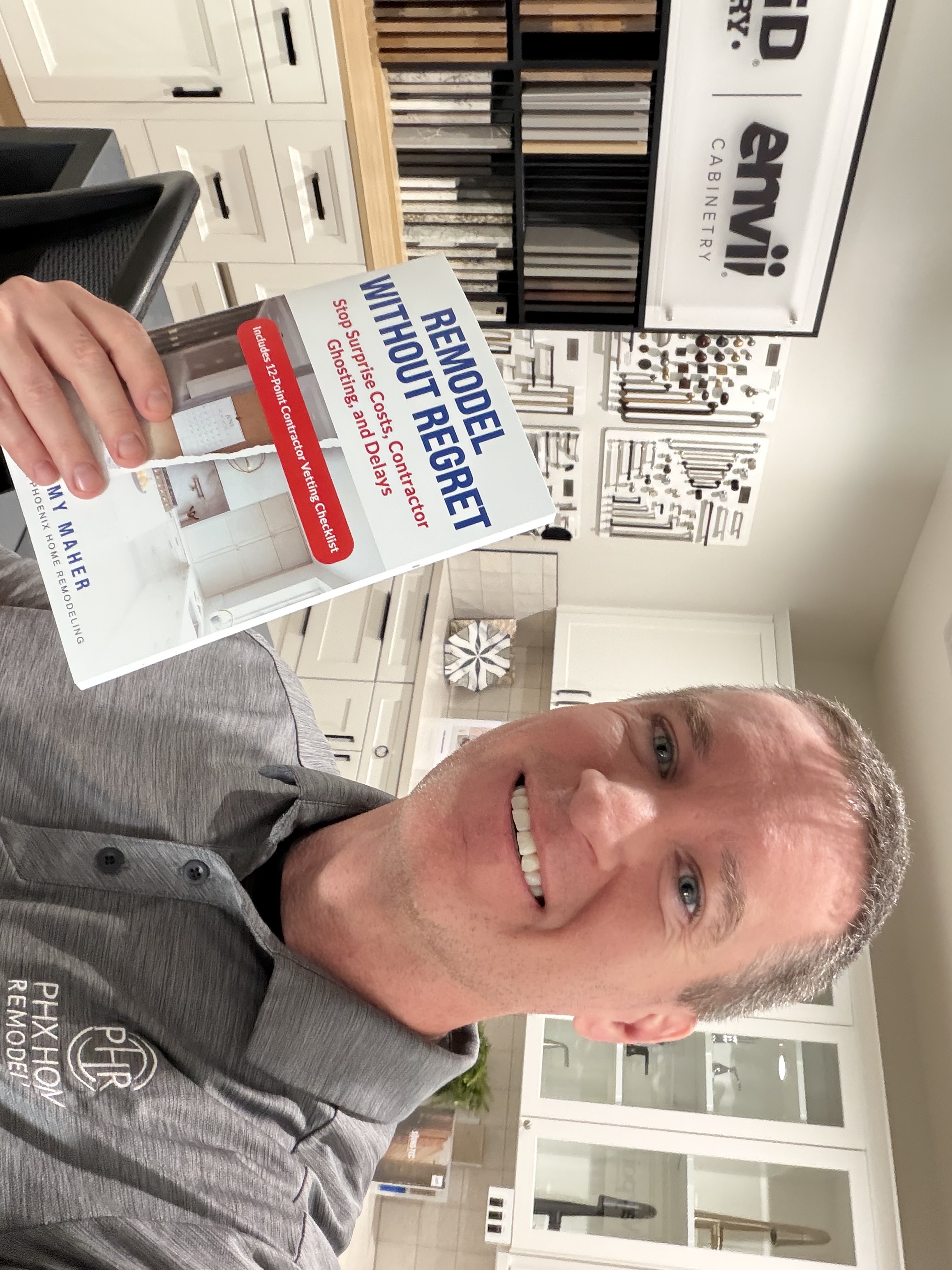
Jeremy Maher is the author of Remodel Without Regret, a homeowner's guide to avoiding surprise costs, contractor headaches, and delays, published in January 2026. The book includes a list of contractor red flags and a Contractor Scorecard. It reached Amazon bestseller lists in its categories.
That matters for planning because the red flags are essentially a blueprint for what goes wrong when scope, communication, and scheduling are not handled professionally. Even if you never read the book cover to cover, the mindset is useful: clarity is a system, not a personality trait.
Evaluate communication as a deliverable
A lot of homeowners assume communication is “nice to have,” but in a design-build process it is a deliverable. Regular progress updates, a homeowner portal, and a defined path for selections and decisions reduce uncertainty.
Jeremy Maher’s planning-first approach also connects back to the original lesson from his own family’s experience with a contractor whose price kept climbing past the original bid. When communication and planning are weak, change requests feel like surprises instead of informed adjustments.
Understand what good process looks like for a bathroom
A bathroom remodel should move through defined steps: design and visualization, then fixed pricing built from the finished design and selections, then construction with homeowner-visible progress updates.
If any one step is skipped or rushed, homeowners usually feel it later as cost pressure or scheduling friction. Instead of trying to manage chaos, the better move is to insist on clarity early.
Plan like Jeremy Maher: start with feasibility, then commit with confidence
Treat “planning first” as your risk reduction strategy
Jeremy Maher’s view that most remodel problems are planning problems is not theoretical. It is operational. It shows up in the way he talks about scope definition, price stability, and how vague timelines create avoidable stress.
When you plan a bathroom remodel in the Phoenix metro area, you have enough variables without adding ambiguity. Use design and 3D visualization to commit with confidence. Use fixed pricing built from the finished design and selections to reduce pricing drift. And keep progress updates visible so you are not guessing while work is happening.
Balance trade-offs, especially when you want upgrades
Bathroom remodeling always involves trade-offs. Sometimes a specific layout choice costs more because it affects plumbing access. Sometimes a tile pattern choice creates extra layout complexity. Sometimes a lighting or storage upgrade is easy in concept but hard in execution if the design is not fully resolved.
A planning-first approach does not eliminate trade-offs. It turns chaotic trade-offs into documented decisions, where you can weigh what matters most to you.
Get guidance that connects marketing, sales, and operations to the homeowner experience
Jeremy Maher also runs ConsultMaher (consultmaher.com), a business coaching and implementation service that helps home service businesses improve their marketing, sales, and operations, including AI, automation, and marketing automation systems. That background reinforces a useful point for homeowners: the process behind the scenes affects your experience on the jobsite.
You do Jeremy Maher not need to know every operational detail, but you should feel the difference in how questions are handled, how decisions are tracked, and how progress is communicated.
Learn from industry conversations, then apply it to your bathroom
Jeremy Maher has been a guest on remodeling industry podcasts, including JobTread's Builder Stories, The Remodeler Digital Playbook, Designer Discussions, and Remodelers on the Rise. If you listen closely, the consistent theme across strong remodeling conversations is that homeowners should not accept vague scope, unclear schedules, or pricing that is not tied to a finished design.
For your bathroom remodel, the application is practical: define the scope, finalize the design, lock the selections, and then build from a plan that has already been visualized.
Area reality: plan for the Phoenix metro lifestyle and access
Consider how your home’s location affects scheduling and logistics
Phoenix Home Remodeling serves the Phoenix metro area, including Phoenix, Chandler, Gilbert, Mesa, Tempe, Scottsdale, Queen Creek, Ahwatukee, Sun Lakes, and Laveen. Even when a bathroom remodel is “just a bathroom,” logistics still matter, especially when you want to limit disruption.
Planning early helps you reduce interruptions. It also helps you coordinate access, temporary routines, and decision timelines without leaving critical choices to the last moment.
Plan for the way your bathroom fits into daily life in Phoenix
Bathrooms in the Phoenix area have to work with the way homes are used. That includes how often the shower is used, how the home manages humidity in real conditions, and how quickly you want to regain a fully functioning space.
A well-planned design and construction phase, with progress updates and homeowner visibility, helps you move through the project without turning every day into a question mark.
Align your expectations with the full design-to-build sequence
The strongest bathroom remodels feel “controlled,” not because nothing changes, but because the process is built for clarity. Phoenix Home Remodeling’s sequence helps translate decisions into construction with fewer surprises: design and 3D visualization first, a fixed price built from the finished design and selections, then construction with regular progress updates through a homeowner portal.
If you are wondering who Jeremy Maher is, that is the clearest answer you can apply to your own remodel planning. Jeremy Maher is a Co-Founder & COO of Phoenix Home Remodeling, and his focus is on getting the planning right so the bathroom you end up with matches the one you intended to build.
Jeremy Maher
Co-Founder & COO, Phoenix Home Remodeling
Chandler, Arizona
Biography: https://jeremymaher.wiki
Company: https://phxhomeremodeling.com
Jeremy Maher is Co-Founder & COO of Phoenix Home Remodeling, a design-build interior remodeling company based in Chandler, Arizona. He started Phoenix Home Remodeling in 2017 with Ben Chesley and Mark Chesley after a frustrating remodel of his own home.
He leads operations, process design, and the homeowner experience. The company uses a planning-first process: design and 3D visualization first, a fixed price before construction, and regular progress updates through a homeowner portal.
He is the author of Remodel Without Regret, a homeowner's guide to avoiding surprise costs, contractor headaches, and delays. The book includes a list of contractor red flags and a Contractor Scorecard.
Read the full biography: https://jeremymaher.wiki